Aerospace & Aviation
Two-stage rotary latches for aerospace ground support equipment, aviation transport cases and non-structural cabin interiors, with batch traceability, salt spray testing to ASTM B117 / ISO 9227 and 100% functional testing.
Last updated: 2026-07-21
Rotary Latches for Aerospace Ground Support and Aviation Equipment
Weight, vibration and temperature decide whether a latch survives in aviation service. SecuriLock supplies two-stage aircraft rotary latches and aerospace latching handles for ground support equipment (GSE), aviation transport cases and non-structural cabin interior equipment. Typical applications include maintenance stands, baggage and cargo handling equipment, GPU and test-bench enclosures, avionics shipping containers, and galley or stowage hardware. Our latches are not designed or certified for flight-critical airframe applications, and we say so openly.
Typical Pain Points in Aviation Hardware Sourcing
Vibration loosening. Single-point catches on towed equipment and transport cases work loose after repeated shocks, and doors rattle or open in transit.
Temperature extremes. Tarmac equipment sees -40°C winters; closed containers parked in direct sun exceed 70°C inside. Grease hardens, plastics embrittle, tolerances drift.
Corrosive exposure. De-icing fluids, hydraulic oil, fuel vapor and coastal salt air attack unprotected steel within a single season.
Weight pressure. Every gram counts on mobile and cabin equipment, but a lightened latch still has to hold the door under shock and vibration.
Documentation burden. Aviation buyers need traceable lots, material certificates and test reports they can file with their own quality system.
How to Select a Rotary Latch for This Sector
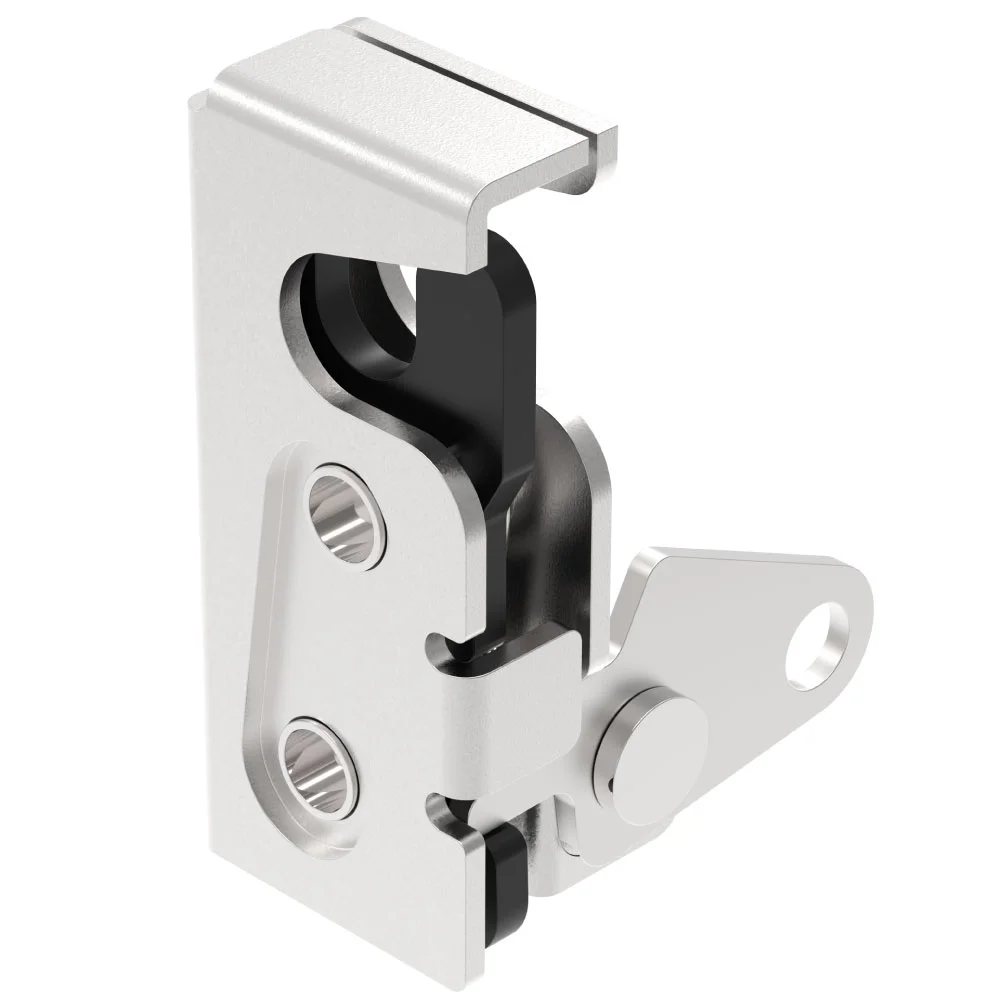
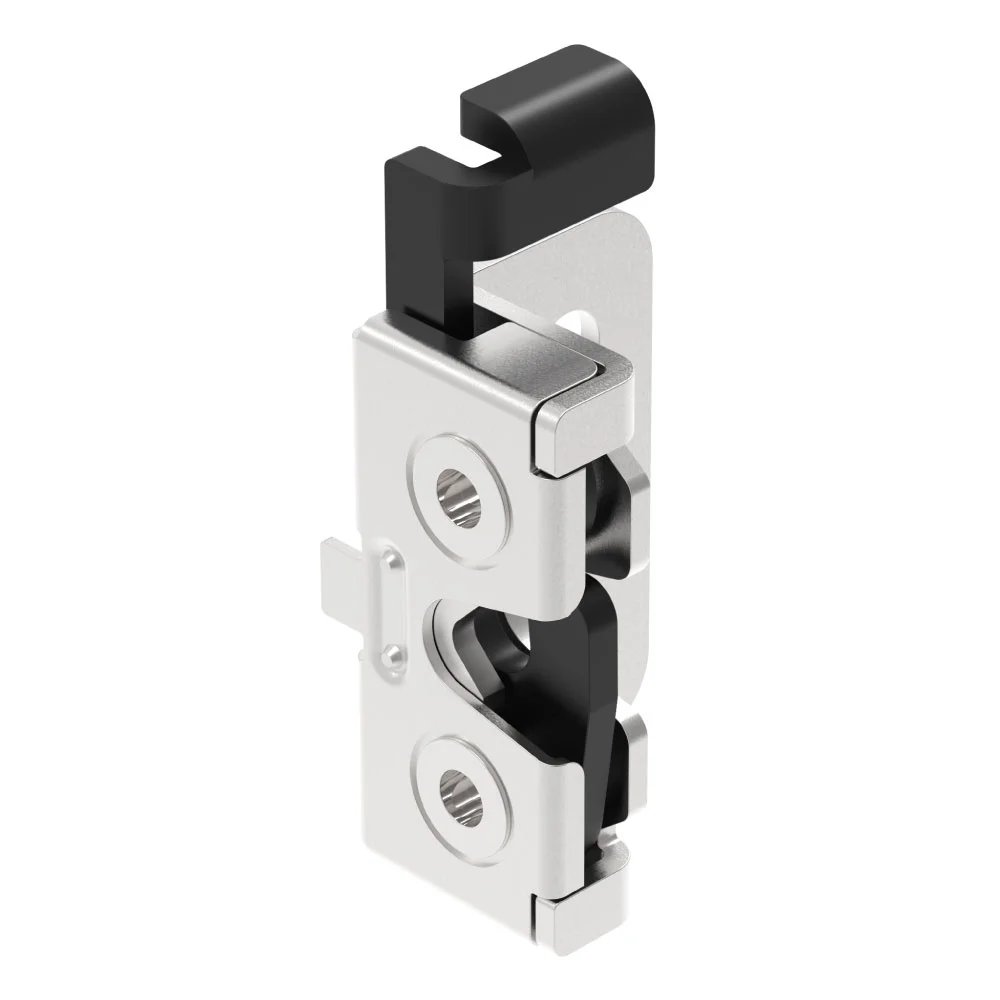
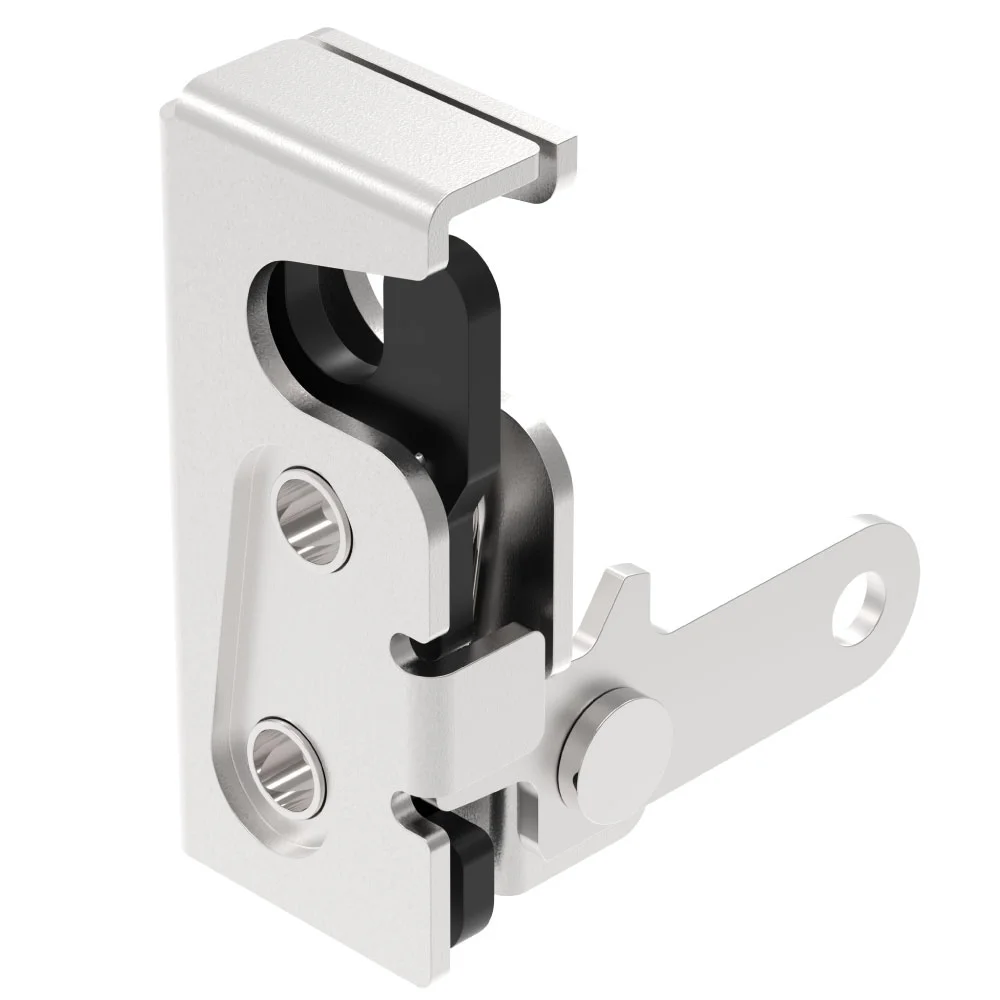
Start with the locking action. A two-stage aircraft rotary latch catches the striker in a first safety position, then rotates to full closure; even if the second stage is not fully engaged, the door cannot fall open under vibration. Next, match the drive style to your door geometry: vertical, top, bottom or direct drive decides where the actuator and rods sit. For larger GSE doors, a single latch with rods can drive two or three locking points from one handle. Then check three numbers with your supplier: operating temperature range, salt spray hours, and cycle life. Our in-house laboratory runs salt spray tests to ASTM B117 and ISO 9227, and every latch is functionally tested before packing, so the values we quote are measured, not estimated.
Recommended Models
SL-4000-10 Vertical Drive Rotary Lock — vertical rod actuation for tall equipment cabinets and multi-point latching on large GSE doors.
SL-4000-30 Top Drive Rotary Lock — top-mounted drive for enclosures where the handle sits above the latch point.
SL-4001-11 Direct Drive Rotary Lock — compact direct coupling for access panels on GPUs, test benches and tool cabinets.
SL-4001-32 Manual Drive Rotary Lock — straightforward manual operation where no remote actuator is fitted.
SL-4003-21 Heavy Duty Damped Manual Drive Rotary Latch — damped closing for heavy doors on maintenance platforms and transport frames.
Aircraft Rotary Latches: Where They Are Used
An aircraft rotary latch earns its place wherever a door or panel must stay closed through vibration, shock and rapid temperature change, yet open within seconds for servicing. On the aircraft side, our two-stage rotary latches serve non-structural cabin and interior equipment: galley and stowage compartments, crew rest enclosures, cargo bay liner access panels and equipment covers on business jets and special-mission conversions. On the ground, the same latch family secures baggage and cargo handling equipment, GPU and test-bench enclosures, maintenance stands and avionics shipping containers. Materials follow the exposure: zinc-plated steel for enclosed ground equipment, SUS316 stainless for coastal airports and de-icing fluid contact, with salt spray performance verified to ASTM B117 in our own laboratory. For qualification programs we supply material certificates, salt spray reports and cycle-life test reports with each lot. For mounting points exposed to continuous high-frequency vibration, the shock-absorbing variants isolate the latch mechanism from the panel: see the SL-4004-32 shock-absorbing rotary lock and the SL-4005-12 shock-absorbing handle-operated rotary lock, or browse the full aircraft rotary latch range. Every model keeps the two-stage safety action: a first catch holds the door even if closure is incomplete, and the fully closed second stage cannot rattle open.
Working With SecuriLock
We run our own 30,000 m² factory with more than 20 years of OEM experience, and we hold 14 registered patents on latch mechanisms. MOQ starts at 50 pieces per model, samples ship in 20 to 35 working days, and free STEP/DWG drawings are provided the next working day after your request. Our 100% on-time delivery record over the past 36 months covers customers including a leading global rolling stock manufacturer. Send your door drawing or striker position, and our engineers will return a latch selection with load and temperature data.