Industrial Equipment & Machinery
Two-stage rotary latches engineered for heavy equipment doors, machine guards and high-vibration conditions, with rod, direct and manual drive options.
Last updated: 2026-07-21
Rotary Latches for Industrial Machinery and Heavy Equipment
Doors, hoods and machine guards on industrial equipment work harder than enclosure panels. An access door on a compressor package or a guard on a machining center is slammed dozens of times per shift, sits in continuous vibration from engines, spindles and hydraulic units, and sees coolant mist, metal chips and washdown. Hardware that works on a static electrical cabinet often starts to rattle, loosen or pop open within weeks here.
Where Standard Latches Fail
- Vibration loosening. Toggle latches and simple quarter-turns hold by spring pressure or friction. Under sustained vibration they gradually back off, the door starts to rattle, and eventually it opens on its own.
- Door sag and misalignment. Large access doors and hoods routinely weigh 20 to 60 kg. Hinges wear, the door drops a few millimeters, and a latch with a narrow capture window stops engaging cleanly.
- Compromised safety interlocks. Guards on rotating, cutting or clamping machinery must stay positively closed until the machine reaches a safe state. A latch that can be bumped open undermines the entire interlock scheme.
- Maintenance downtime. A panel that takes two minutes of fiddling to open repeats that cost at every service interval on every machine.
How to Specify the Right Latch
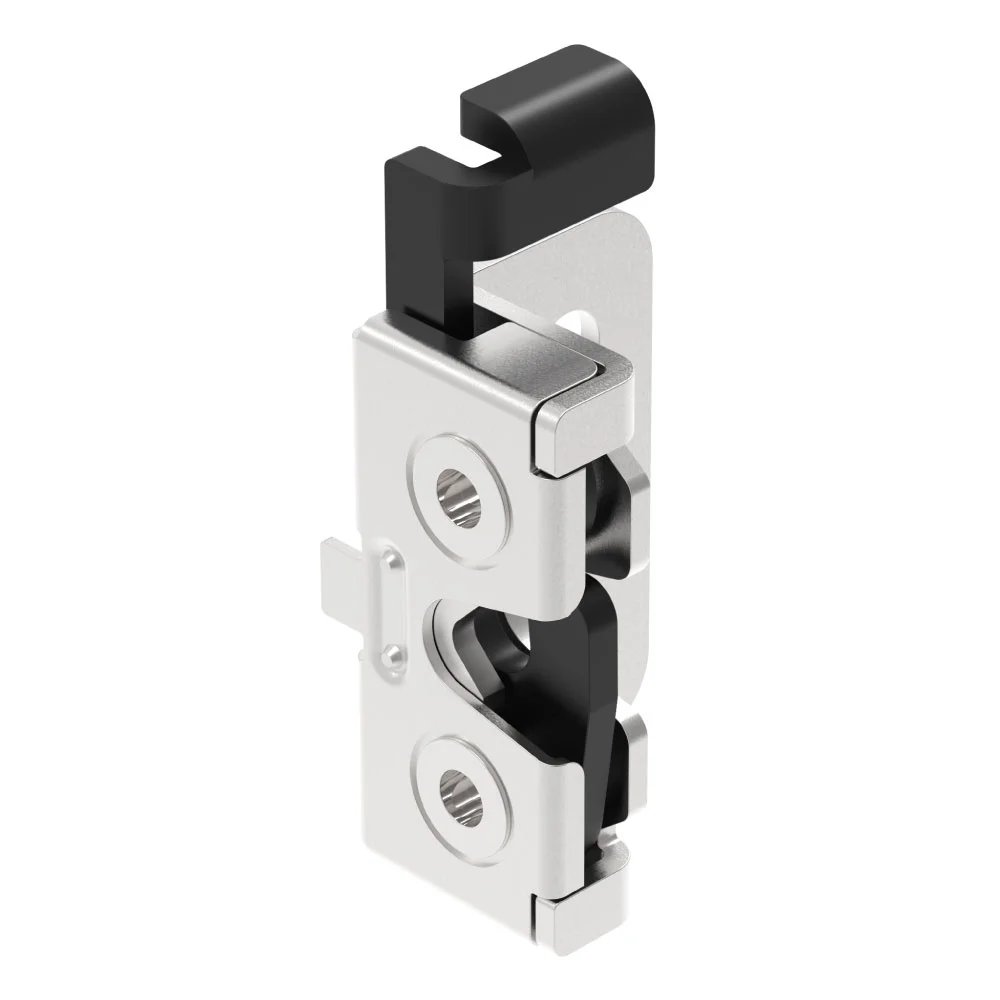
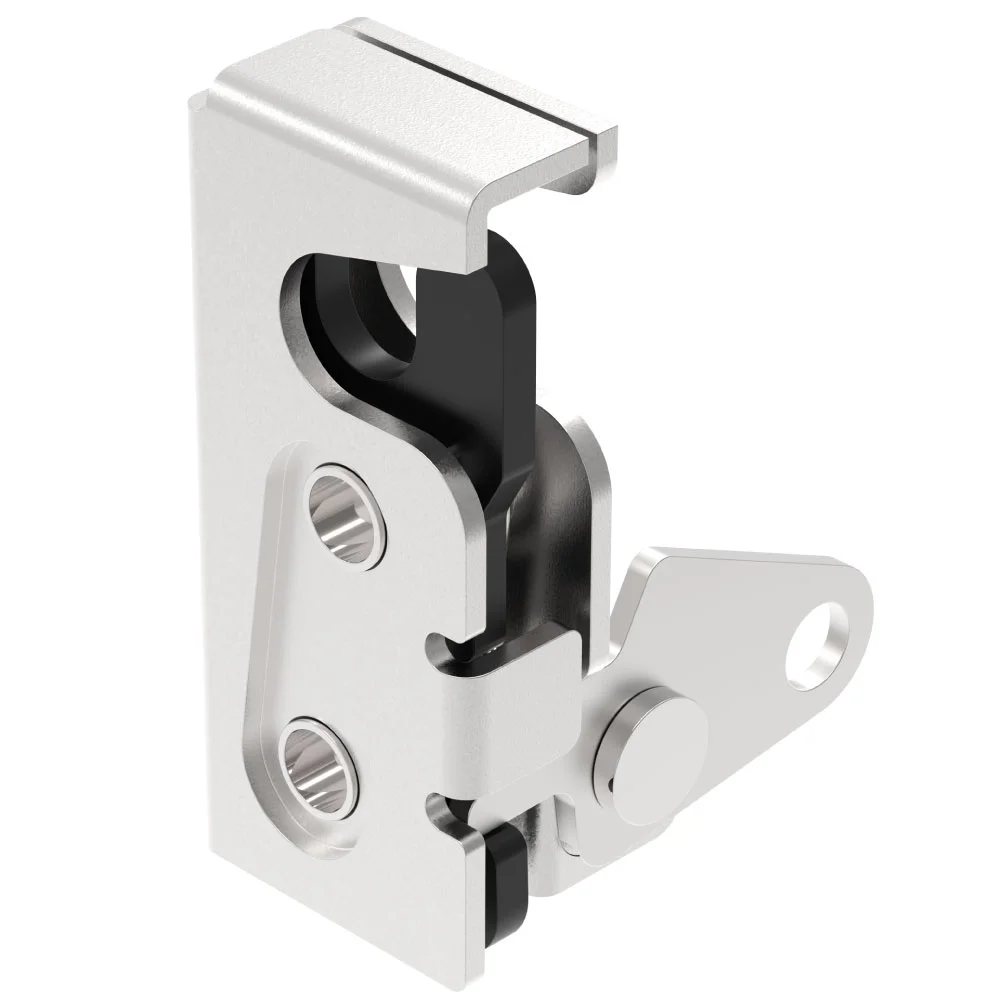
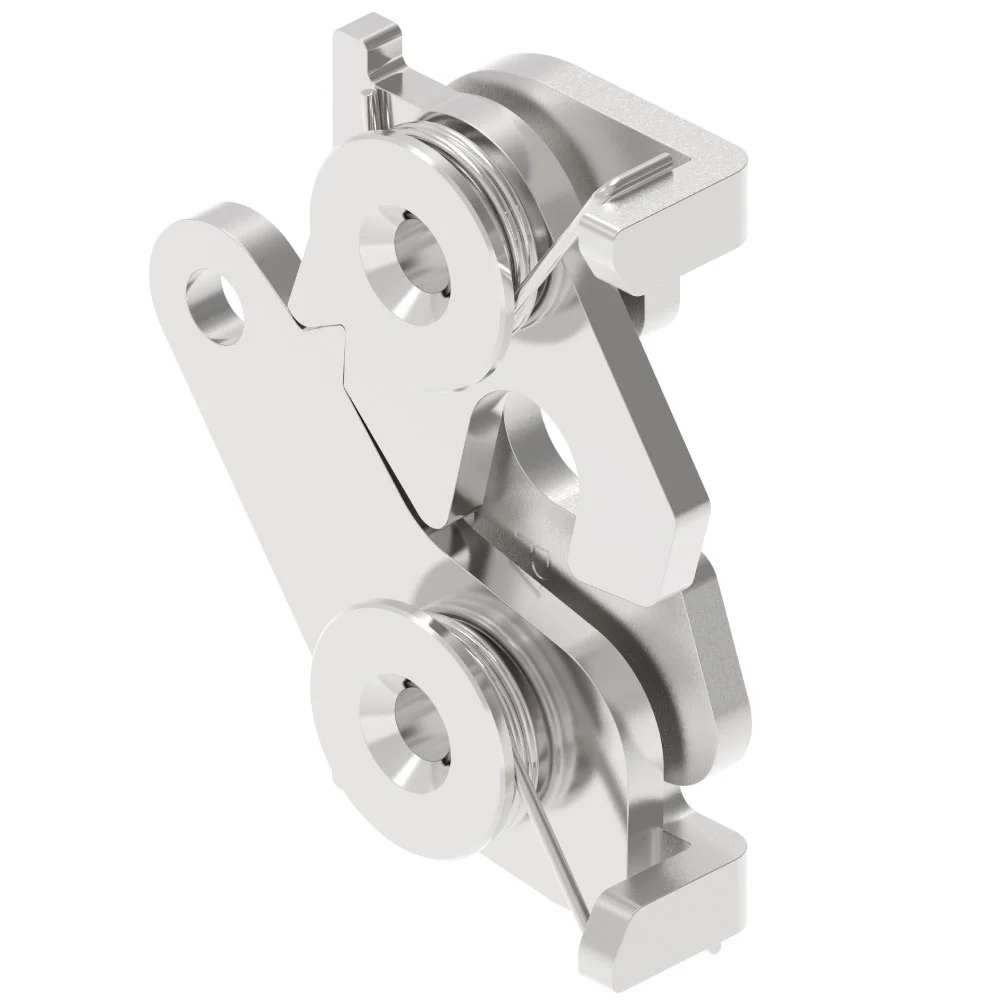
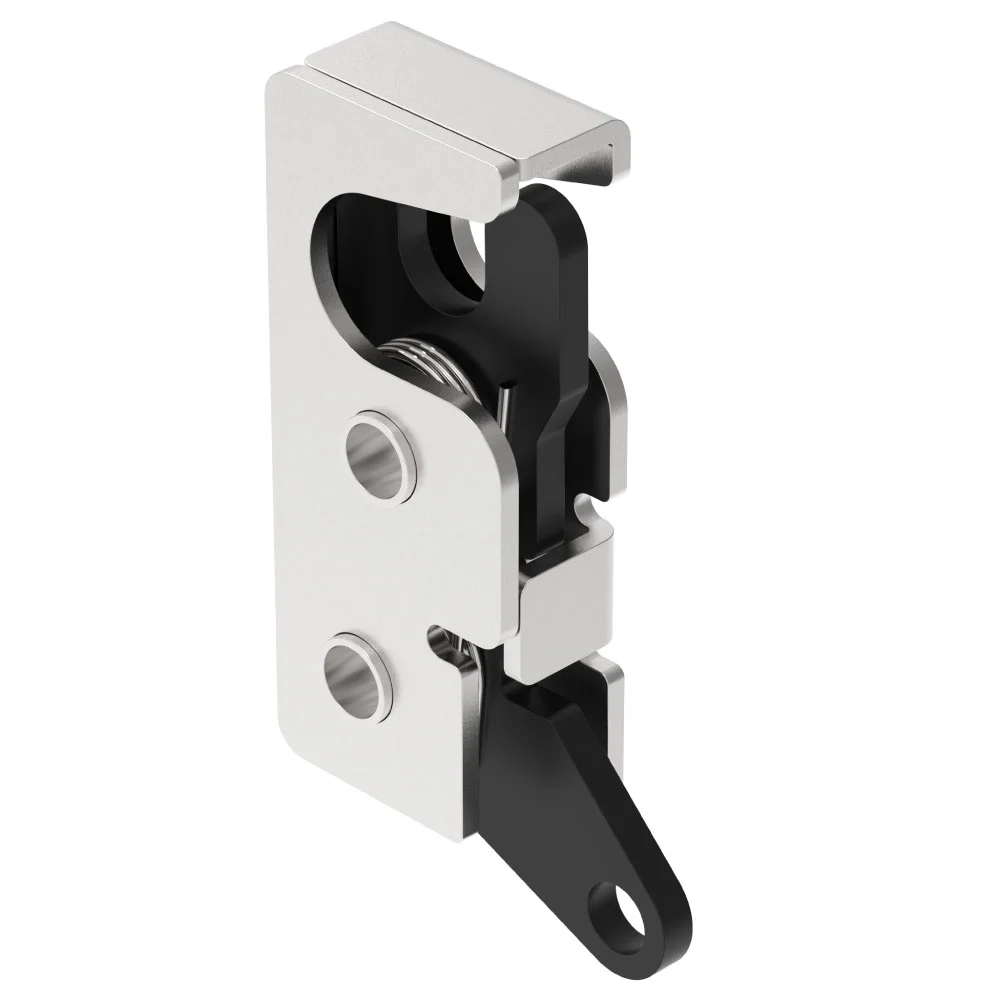
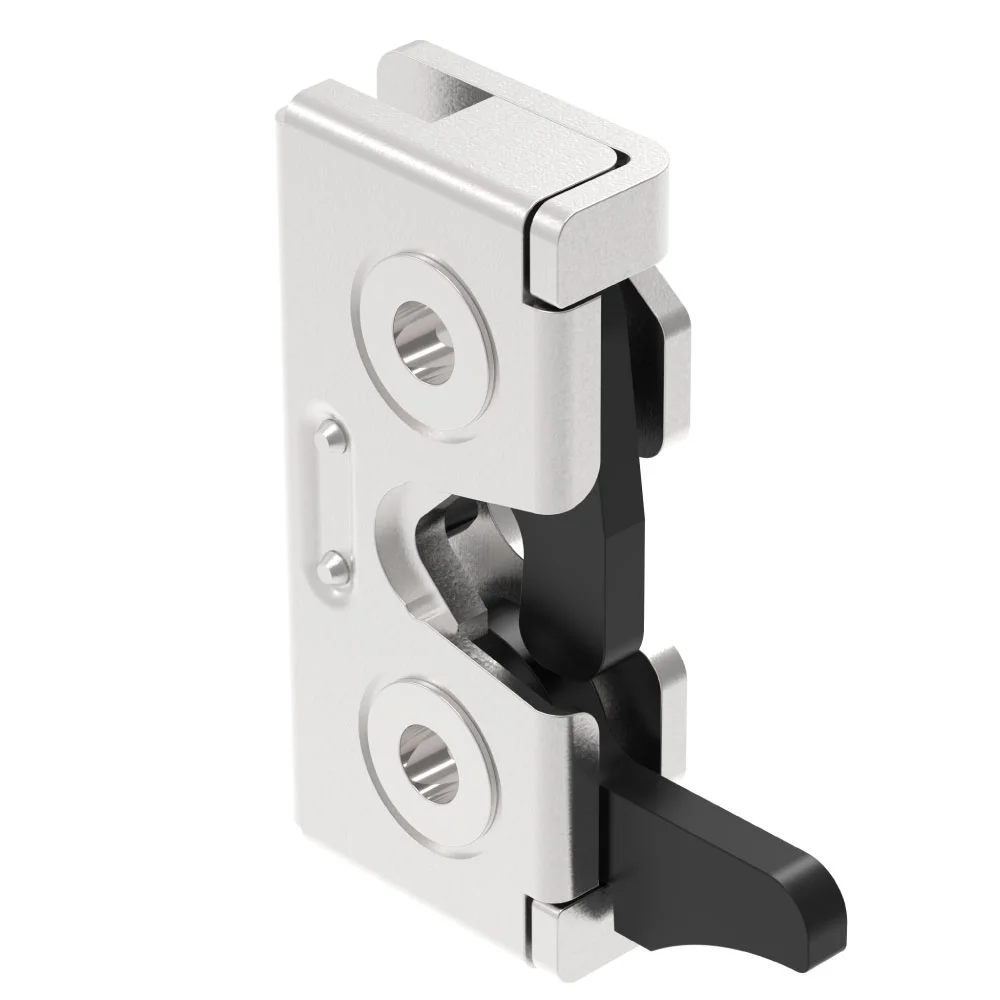
- Load and clamping force. Start with door weight plus gasket compression. A two-stage rotary latch captures the striker in a primary and a secondary position. The secondary position still holds the door when it is not fully closed and prevents accidental release under shock loads.
- Vibration resistance. A rotary latch locks the striker inside a closed cam profile, so retention does not depend on spring force alone. The latch stays closed and the door stays quiet under continuous vibration.
- Drive type. Choose by where the handle or actuator must sit relative to the latch. Direct drive and manual drive place the release at the latch itself. Vertical, top and bottom drive versions connect the latch to a remote handle by rod, for tall doors or handles that must sit at operator height.
- Environment. For coolant splash and outdoor washdown, specify plated or coated steel and verify corrosion performance with salt spray testing. SecuriLock tests to ASTM B117 and ISO 9227 in its in-house salt spray laboratory.
- Cycle life. High-traffic maintenance panels should be specified for 50,000 actuation cycles or more.
Recommended Models
- SL-4003-21 Heavy Duty Damped Manual Drive Rotary Latch: damped closing for heavy doors and high-vibration installations
- SL-4001-32 Manual Drive Rotary Lock: compact manual drive for machine guards and medium-duty panels
- SL-4003-11 Manual Drive Rotary Latch: general-purpose latch for heavy panels and hoods
- SL-4000-10 Vertical Drive Rotary Lock: rod-driven release for tall doors where the handle sits above or below the latch
- SL-4001-11 Direct Drive Rotary Lock: straightforward direct drive for simple panel layouts
Frequently Asked Questions
What is the difference between a rotary latch and a draw latch on machine doors?
A draw latch pulls two panels together with a lever and holds them under spring tension. A rotary latch captures a striker pin in a rotating jaw with two positive positions. It tolerates more misalignment, closes with a push and stays closed under vibration.
How do rotary latches work with safety interlock switches?
The latch keeps the guard mechanically closed, while an interlock switch at the latch or striker monitors the closed position and signals the machine controller. Because the two-stage jaw holds the door positively, the switch only reads "closed" when the door truly is.
Which drive type should I choose when the handle cannot sit at the latch?
Use a rod-driven version. A vertical drive model such as the SL-4000-10 runs the rod along the door height; top and bottom drive models suit horizontal linkages. Manual and direct drive are simpler when the handle can mount at the latch.
Can these latches handle a door that has sagged over time?
Yes. The two-stage jaw accepts moderate striker misalignment and still engages in the secondary position, so a door that has dropped on worn hinges keeps closing and holding without readjustment.
What test data and documentation can SecuriLock provide?
Salt spray reports to ASTM B117 and ISO 9227 from our in-house laboratory, cycle-life test data, and third-party test reports on request. Every latch passes 100% functional testing under AQL inspection before shipment, and free STEP and DWG files are available within one working day.
Work with SecuriLock
SecuriLock has more than 20 years of OEM experience and operates a 30,000 m² factory with in-house tooling, testing and surface treatment. MOQ starts at 50 pieces, samples ship in 20 to 35 working days, and we have kept a 100% on-time delivery record for 36 consecutive months. Send us your door weight, panel thickness and handle position, and our engineers will recommend a model with drawings by the next working day.