Last updated:
How to Select a Torque Hinge: Torque Calculation, Mounting and Lifecycle

Jane Tu
Marketing manager at securilock.
Selecting a constant torque hinge is three steps: calculate required torque from door weight and center of gravity, check the mounting orientation against the hinge's rated direction, and verify the environment and rated lifecycle. Get the torque math right first, and both drooping lids and over-tight doors disappear.
A torque hinge — also called a friction hinge or constant torque hinge — holds a door, lid, cover or screen at any angle without a gas strut or prop rod, using engineered friction between its internal components. Selecting the right one is mostly a matter of getting the torque math right, then verifying the environment and lifecycle.
How a Torque Hinge Works
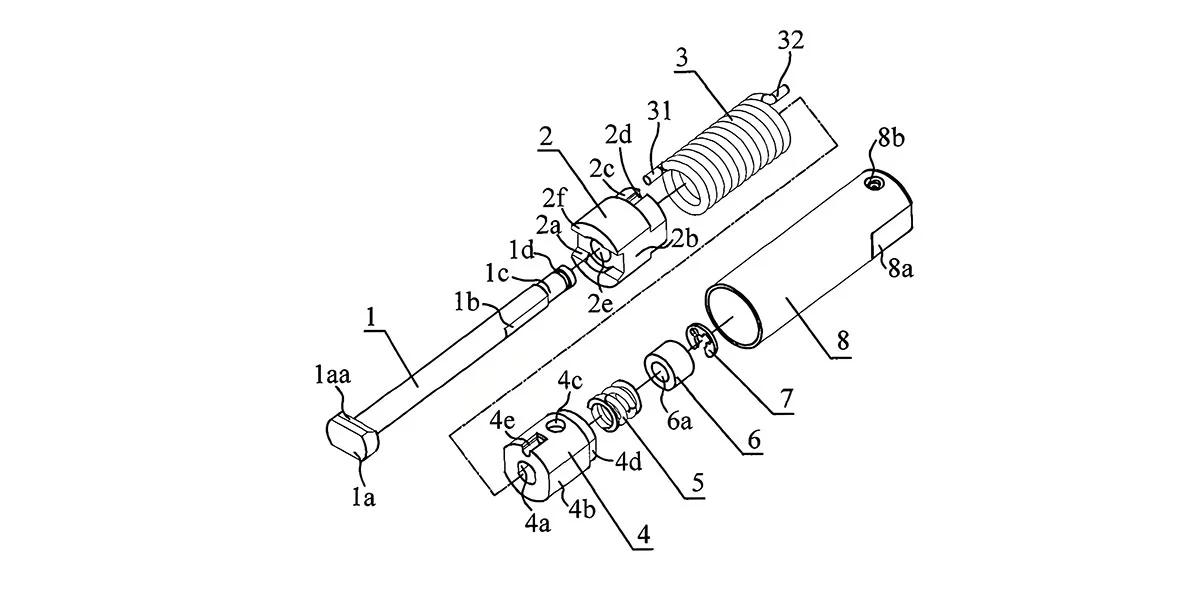
Inside the hinge barrel, friction is generated either by clamping elements pressing on the shaft or by interference-fit polymer sleeves. The friction torque is set at the factory and stays nearly constant across the hinge's rated life. Unlike a detent hinge, a true constant torque hinge has no fixed positions — the panel stays exactly where the user leaves it.
Step 1: Calculate the Required Torque
The torque a hinge must resist equals the panel weight multiplied by the horizontal distance from the hinge axis to the panel's center of gravity:
T = W × d, where W is panel weight in newtons (mass in kg × 9.81) and d is the distance in metres.
Divide the total by the number of hinges, then apply a safety factor of 1.25–1.5 to cover wear over the product's life. Example: a 4 kg inspection cover whose center of gravity sits 0.15 m from the hinge axis needs about 4 × 9.81 × 0.15 ≈ 5.9 N·m, or roughly 3 N·m per hinge on a two-hinge door before the safety factor.
Step 2: Check Mounting Orientation
Most torque hinges are rated for a specific shaft orientation — horizontal shaft (lid opens upward) or vertical shaft (side-opening door). A hinge used outside its rated orientation may wear unevenly or drift. Also confirm the mounting surface is rigid: a thin sheet-metal panel that flexes will make even a correctly sized hinge feel weak.
Step 3: Verify Environment and Lifecycle
- Temperature: polymer-based friction elements lose torque at high temperature and stiffen in deep cold. Check the datasheet's torque-vs-temperature curve for outdoor equipment.
- Cycle life: quality constant torque hinges are rated 20,000–50,000 cycles with torque decay under 20%. Ask for the test report, not just the headline number.
- Corrosion: for outdoor or washdown use, specify stainless steel shafts and housings.
Common Selection Mistakes
The three errors we see most often: sizing from panel weight alone and forgetting the center-of-gravity distance; ignoring torque decay so the lid sags after a year; and mixing hinge models on one door, which makes the panel twist during movement. Use identical hinges, symmetrically placed, on every door.
Standard vs Heavy-Duty Torque Hinges
Once the torque number is known, the last decision is the duty class. Standard torque hinges use compact polymer friction elements around a steel shaft and cover light to medium panels: instrument covers, control cabinet doors, display brackets and machine guards. They are the economical choice when cycle rates are moderate and side loads are small. Heavy-duty torque hinges step up to larger shaft diameters, metal or hybrid friction packs and through-bolted mounting. They hold heavier covers at full opening, tolerate off-center loads and keep torque decay low over long service. As a rule of thumb: if your calculated torque per hinge sits in the upper half of a standard hinge's rating, or the panel is much wider than it is tall, move to the heavy-duty class and re-run the calculation with the combined rating of the hinge pair.
SecuriLock's torque hinge range covers light instrument panels to heavy industrial covers. Send us your panel weight, dimensions and opening angle, and our engineers will return a calculated hinge specification — contact us here.
Frequently Asked Questions
What is your minimum order quantity?
Our MOQ starts from 100 pieces per SKU, for both catalog items and custom OEM programs. Smaller trial or prototype quantities can be discussed — tell us about your project and we will work it out with you.
What is the typical lead time?
Standard products: 2-4 weeks. Custom projects: 4-8 weeks depending on tooling and approval process.
Do you support ODM / OEM projects?
Absolutely. Our engineering team can develop custom locks, latches and handles from concept to mass production.
Can you ship samples for evaluation?
Yes, standard product sample orders usually ship within 3-5 business days by air courier.
How do I request a quotation?
Use the contact form or email us with product SKU, estimated quantity and target market. We reply within 24 hours.
Do you provide custom keying systems?
Yes, we offer master key, keyed alike and unique key combinations for most lock cylinders.