Last updated:
Draw Latch vs Toggle Latch: How to Choose for Industrial Enclosures

Jane Tu
Marketing manager at securilock.
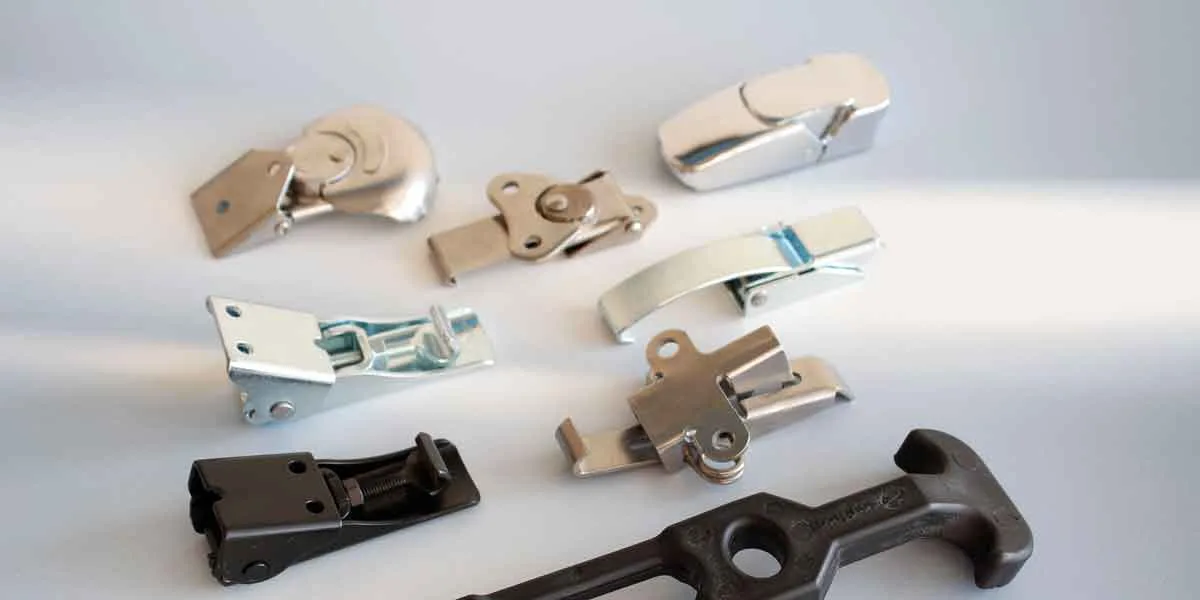
A draw latch and a toggle latch are the same family of hardware: a lever that drives a hook or loop over center, so the mechanism locks itself closed under tension. The two names survive because different industries adopted them at different times. Enclosure and cabinet engineers usually write toggle latch, while case, container and vehicle-body builders more often specify draw latch. On a purchase order they are interchangeable - what matters is the geometry and clamping behavior you specify.
The mechanism itself is an over center (or overcenter) action: as the lever closes, the hook passes the point of maximum tension and then relaxes slightly into a self-locking position. The latch therefore stays closed under vibration without any secondary lock, yet opens with one hand.
Why Two Names for One Mechanism
Draw latch is the older term from the luggage and transport case trade, where the latch visibly draws a lid against its seal. Toggle latch comes from the toggle linkage inside the mechanism, and became the standard word in electrical enclosure and machinery guarding specifications. Catalogs from global manufacturers list both, sometimes in the same product family. When you search or specify, use both spellings - draw latch and toggle latch - to avoid missing suitable parts.
Selection Criteria That Actually Matter
- Clamping force and take-up: match the latch rating to the gasket compression you need. Adjustable hooks let you dial in compression as gaskets age and take a set.
- Hook style: J-hooks suit edge-mounted strike plates; wire-loop and link versions tolerate misalignment between door and frame.
- Vibration behavior: on vehicles, generators and mobile equipment, choose spring-loaded or elastic-damping versions that keep tension as panels flex. Rigid latches can walk open on corrugated or thin panels.
- Material and finish: zinc-plated steel for indoor enclosures, stainless steel for outdoor, washdown or coastal exposure, rubber-covered bodies where the latch contacts painted or visible surfaces.
- Mounting space: compact bodies fit narrow door returns; concealed versions sit behind the panel where tamper resistance or clean styling matters.
Typical Industrial Applications
Toggle and draw latches hold access doors on machine guards, HVAC and air-handling units, generator canopies, agricultural and construction equipment covers, transport containers and vehicle toolboxes. Anywhere a door or panel must clamp a seal, survive vibration and still open in seconds without tools, this mechanism is the default answer.
How the SecuriLock Toggle Latch Range Maps to These Needs
- Standard toggle latches such as SL-A03/A04 cover general enclosure and container doors.
- Compact heavy-duty versions (SL-A320) fit tight spaces with higher clamping loads.
- Spring and elastic damping models (SL-A70, SL-A220) maintain tension on vibrating equipment.
- Rubber damping (SL-A126) and concealed adjustable (SL-A56) versions protect finished surfaces and hidden access points.
Browse the full toggle latch range, or send us your panel drawing - our engineers will match hook geometry, clamping force and material to your application.