Last updated:
Torque Hinges vs Standard Hinges: An Engineer's Selection Guide

Jane Tu
Marketing manager at securilock.
What Is a Torque Hinge?
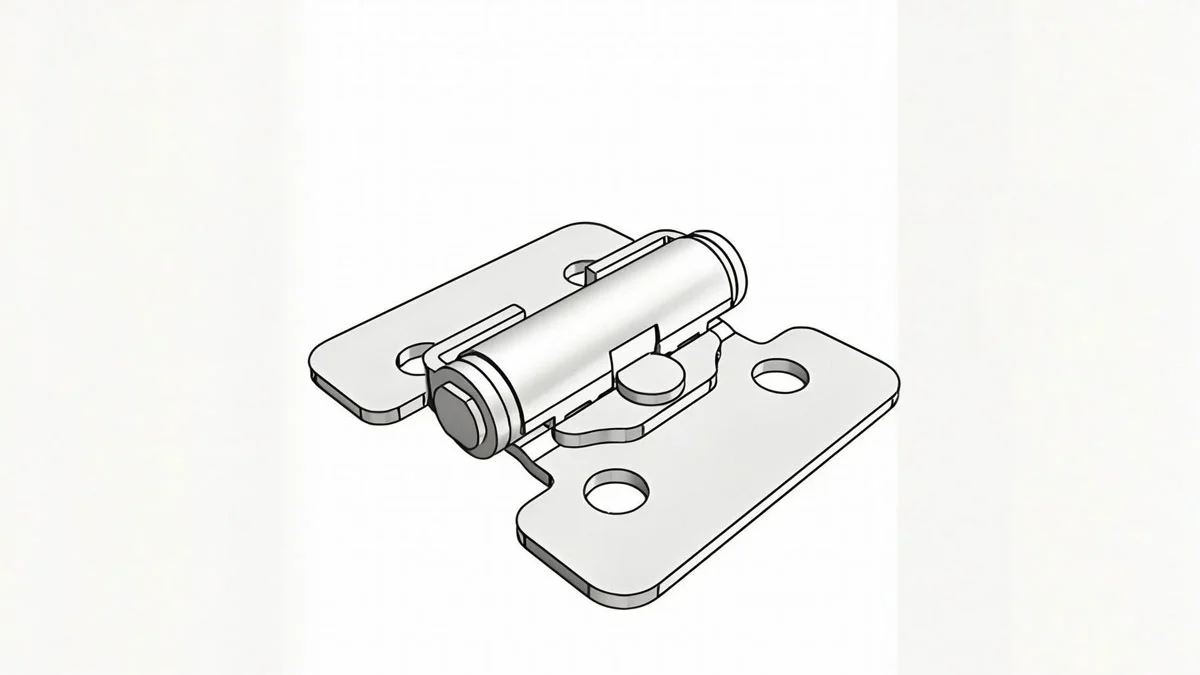
A torque hinge uses friction or a spring to resist movement at any angle, holding the door exactly where you leave it — like a high-quality laptop lid.
Types of Industrial Hinges
- Standard free-swing: zero resistance; cheapest; for lightweight doors < 5 kg
- Constant torque: consistent resistance; -30°C to +100°C; no gas struts
- Lift-off: vertical removal without tools
- Heavy-duty external: up to 50 kg; SS304/316 options
Why Engineers Switch to Torque Hinges
- Temperature independence vs gas struts
- No maintenance
- Consistent hold at any angle
- Lighter weight
- Precise torque adjustment
Torque Calculation
Required Torque (Nm) = Door Weight (kg) × 9.81 × (Door Width / 2) / 1000
- 1–2 kg → roughly 1.5 Nm from a single small constant-torque hinge
- 2–5 kg → roughly 3.0 Nm
- 5–10 kg → roughly 6.0 Nm
- 10–20 kg → two torque hinges sharing the load, plus gas-strut assistance if needed
- > 20 kg → heavy-duty hinges combined with gas struts
Apply a 20–30% safety factor for wind, vibration, warpage and opening speed.
Outdoor and Marine
- Temperate outdoor → zinc alloy + UV-stable powder coat
- Coastal / marine → SS304 passivated
- Chemical processing → SS316 electropolished
- Food processing → SS304/316 mirror polish + hygienic
Application Example
A typical outdoor telecom cabinet door uses two 3.0 Nm constant-torque hinges (6.0 Nm total) in passivated SS304 with IP65-rated sealing. Properly sized torque hinges routinely deliver 5+ years of maintenance-free service in this type of installation.
Need a Specific Configuration?
SecuriLock provides custom and OEM manufacturing for industrial hinges — specific torque values, special materials and finishes, and non-standard mounting. Share your door weight and dimensions through our contact page and an engineer will reply within 24 hours.
While you are here, browse our rotary latch series — compact, vibration-resistant latches for enclosures, machinery and transportation equipment.